
Best Fast-Growing Privacy Hedges for Your Backyard (Ultimate Guide)
Nothing beats the feeling of stepping into your backyard and enjoying a peaceful, private sanctuary. While wooden fences or brick walls can feel cold and restrictive, a lush, green living wall brings natural beauty, cools down the air, and welcomes local wildlife.
However, no one wants to wait ten years for their hedge to reach head-height.
If you want to block out noisy neighbors, ugly views, or strong winds as quickly as possible, you need fast-growing privacy hedges. In this ultimate guide, we’ll explore the top-rated evergreen and deciduous plants that grow rapidly, how to plant them for maximum density, and the smart tools you need to maintain them.
Top 5 Fast-Growing Plants for Living Privacy Screens
When choosing a privacy hedge, you need to balance growth speed with maintenance. Here are the absolute best, beginner-friendly options that thrive in most climates:
1. Thuja 'Green Giant' (The Ultimate Evergreen Shield)
If you ask any landscaping professional for a bulletproof privacy screen, Thuja Green Giant will be at the top of the list. This massive, pyramidal evergreen is famous for its exceptional growth rate and uniform look.
Growth Rate: Up to 3 to 5 feet (1–1.5 meters) per year once established.
Best For: Large properties, windbreaks, and year-round, total visual blocking.
Pros: Highly resistant to pests, diseases, and heavy snow; tolerates a wide variety of soils.
2. Privet (Ligustrum) (The Classic English Cottage Look)
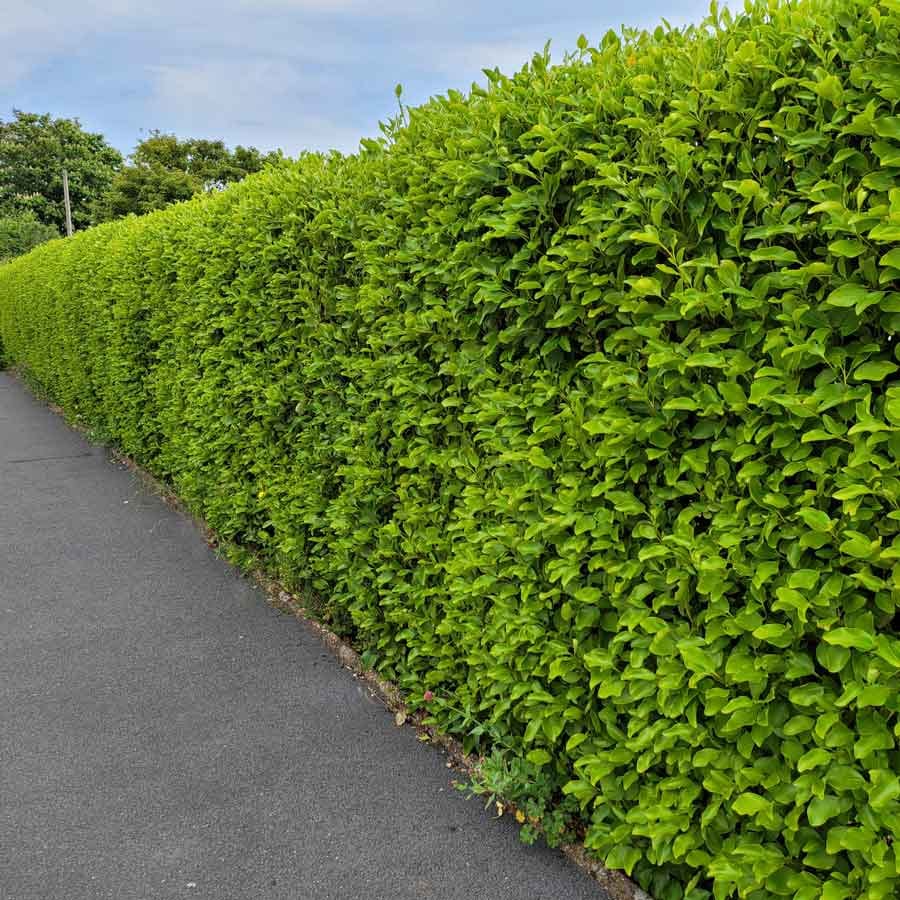
Privet is a traditional hedge favorite across the UK and Europe. It grows incredibly fast and responds beautifully to heavy shearing, allowing you to create sharp, formal, box-shaped green walls.
Growth Rate: 2 to 3 feet (60–90 cm) per year.
Best For: Medium to large gardens where a neat, manicured look is desired.
Pros: Tolerates severe pruning and thrives in both full sun and partial shade.
3. Cherry Laurel (Prunus laurocerasus) (The Glossy Modern Wall)
With its large, shiny, deep-green leaves, Cherry Laurel offers a luxury look while providing an impenetrable barrier. In spring, it also produces lovely white, fragrant flowers that attract pollinators.
Growth Rate: Around 2 feet (60 cm) per year.
Best For: Modern landscapes and blocking heavy street noise (the thick leaves act as natural soundproofing).
Pros: Excellent shade tolerance; stays vibrant and glossy even in harsh winters.
4. Boxwood (Buxus) (Best for Elegant, Low-to-Medium Borders)
While traditional English Boxwood grows slowly, newer hybrid varieties grow much faster while maintaining that tight, dense, aristocratic foliage. It is perfect if you don't need a massive 10-foot wall but want an elegant boundary.
Growth Rate: 1 to 1.5 feet (30–45 cm) per year (for fast-growing cultivars).
Best For: Front yard boundaries, framing flower beds, or neat geometric pathways.
Pros: Incredibly dense, classic look, and highly adaptable.
5. Aromatic Lavender Hedges (The Premium Perimetar Choice)
Who says a privacy screen has to be a giant green monolith? If you have a sloped property, a sunny fence line, or a medium-sized border, planting a dense line of Lavender creates a breathtaking, aromatic low hedge.
Growth Rate: Reaches full mature size in 2 to 3 seasons.
Best For: Sunny borders, slopes, and deterring unwanted wildlife with its intense scent.
Pros: Stunning purple blooms, attracts bees, and provides the perfect harvest for DIY essential oil distillation.
Essential Setup: The Secret to Fast-Growing Hedges
Buying the right plants is only half the battle. If you want your hedge to grow at maximum speed, you must give it the right foundation.
Spacing is Key
Planting your shrubs too far apart means you’ll wait years for them to merge. Planting them too close will cause them to suffocate each other. As a rule of thumb:
For large evergreens like Thuja, space them 5 to 6 feet apart.
For smaller hedging plants like Privet or Lavender, space them 12 to 18 inches (30–45 cm) apart to create a seamless, tight weave.
Smart Irrigation: The "Drip" Method
Fast growth requires consistent moisture, especially during the first two summers. The biggest mistake beginners make is watering with a standard garden hose, which washes away topsoil and leaves the deep roots dry.
Investing in an automated drip irrigation system ensures that water is delivered directly to the root zone slowly and efficiently, preventing rot and saving up to 70% more water compared to traditional spraying.
Common Mistakes to Avoid with Fast-Growing Hedges
❌ Neglecting the Soil: Fast-growing plants are heavy feeders. Always mix your native soil with rich organic compost before planting.
❌ Skipping Early Pruning: It sounds counterintuitive, but trimming the tops and sides of your young hedge during the first year forces the plant to branch out horizontally, making the hedge much denser at the bottom.
❌ Poor Drainage: None of these plants like "wet feet." Ensure your soil drains well, especially if you are planting on flat clay surfaces.
Final Thoughts: Plant in Autumn for Spring Success
The absolute best time to plant your new privacy hedge is in the early to mid-autumn. The cooler air reduces stress on the leaves, while the warm soil allows the roots to establish safely before winter sets in. By the time spring arrives, your hedge will be ready to power up and shoot skyward!
Ready to transform your backyard into a beautiful, private oasis? Select your region to find the best local nurseries, certified seedlings, and essential landscaping tools: