Spring Bulb Bloom Calendar: Continuous Color Winter to Summer
🌸 Spring Bloom Timeline:
A Month-by-Month Guide to Flowering Bulbs
Introduction
One of the greatest joys of gardening is watching the landscape awaken after winter.
But creating a garden that flowers continuously isn't a matter of luck—it's a matter of planning.
Different bulbs bloom at different times, and by choosing the right combinations, you can enjoy colorful flowers from the very first snowdrops in late winter to elegant lilies in early summer.
Instead of thinking about individual plants, successful gardeners think in terms of bloom succession.
As one flower fades, another begins to bloom.
The result is a garden that never feels empty.
This month-by-month guide will help you understand when popular flowering bulbs bloom, how they overlap, and how to combine them for the longest possible display.
Why Bloom Timing Matters
Many beginners choose bulbs based only on flower color.
Experienced gardeners choose them based on flowering sequence.
Planning bloom times allows you to:
enjoy flowers for several months instead of a few weeks;
create smooth seasonal transitions;
support pollinators for longer;
reduce empty spaces in borders;
build a garden that changes naturally throughout the season.
A well-planned bulb garden tells a story, revealing new colors and textures every few weeks.
🌼 Did You Know?
Professional botanical gardens often design displays around successive flowering, ensuring that visitors can enjoy colorful landscapes throughout the entire spring season rather than during a single peak bloom.
Late Winter (February)
Although much of the garden is still dormant, several remarkable bulbs begin flowering surprisingly early.
Featured Flowers
❄️ Snowdrops (Galanthus)
The classic symbol of hope after winter.
Often blooming through snow, snowdrops are among the first flowers to appear.
💛 Winter Aconites (Eranthis hyemalis)
Bright yellow flowers that create cheerful carpets beneath deciduous trees.
They combine beautifully with snowdrops.
💜 Early Crocuses (Crocus chrysanthus)
These compact crocuses often bloom before lawns even begin growing.
Their purple, yellow, and white flowers provide one of the earliest nectar sources for bees.
Garden Combination
Imagine white snowdrops emerging beneath bare branches, surrounded by golden winter aconites and scattered drifts of early crocuses.
This trio creates one of the earliest and most magical displays of the gardening year.
Early Spring (March)
As temperatures gradually rise, the pace of flowering accelerates.
March is often the month when gardens truly begin to awaken.
Featured Flowers
💜 Dutch Crocuses (Crocus vernus)
Larger flowers with bold spring colors.
Excellent for lawns and borders.
🌼 Miniature Daffodils
Compact daffodil varieties begin flowering, adding cheerful yellow and white blooms.
💙 Dwarf Iris (Iris reticulata)
Brilliant blue and violet flowers provide striking contrast alongside crocuses.
🌿 Scilla (Scilla siberica)
Brilliant blue flowers that naturalize readily beneath trees.
Pollinator Highlight
By March, bees become increasingly active.
Gardens planted with snowdrops, crocuses, dwarf irises, and miniature daffodils provide an uninterrupted supply of nectar during this critical period.
💡 Expert Tip
Instead of planting bulbs in separate beds, overlap flowering periods by mixing species in the same area. As one finishes blooming, another begins, creating a seamless transition that keeps the garden vibrant for weeks.
Bloom Calendar Overview
Month
February
March
April
May
June
July
Main Flowering Bulbs
Snowdrops, Winter Aconites, Early Crocuses
Crocuses, Miniature Daffodils, Dwarf Iris, Scilla
(Coming in Part 2)
(Coming in Part 2)
(Coming in Part 3)
(Coming in Part 3)
🐝 Pollinator Corner
A garden that begins flowering in February provides an invaluable lifeline for early pollinators. By selecting bulbs with overlapping bloom periods, you create a continuous source of nectar and pollen that supports bees and other beneficial insects long before most summer flowers appear.
🛒 Recommended fertilizer for magnificent blooms
📦 PRODUCT TIP / AMAZON BOKS: Organic slow-release fertilizer for flower bulbs and perennials. 100% natural fertilizer with a balanced potassium and phosphorus content. Guaranteed strong stems, vibrant colors, and healthy bulbs.
🌿 Coming Up in Part 2
We'll continue the seasonal journey with:
🌼 April – Peak spring color
🌷 May – Tulips and Alliums take center stage
Layering bulbs for continuous flowering
Garden design examples
Bloom overlap strategies
🌍 Garden Inspiration
The world's most memorable spring gardens rarely burst into bloom all at once. Instead, they unfold gradually—snowdrops quietly appear beneath bare trees, crocuses add splashes of purple and gold, and daffodils soon brighten the landscape. By planning your garden around bloom timing rather than individual plants, you create a living calendar that changes week by week, inviting you outside to discover something new each time.
Mid-Spring (April)
April is often considered the most spectacular month in the spring garden.
By now, the earliest bulbs are fading while a new wave of flowers transforms borders, containers, and parks into vibrant displays of color.
This is the month when careful planning truly pays off.
Featured Flowers
🌼 Daffodils (Narcissus)
Few flowers symbolize spring as perfectly as daffodils.
Available in countless shapes and shades of yellow, white, cream, and orange, they provide structure, brightness, and reliability.
Many varieties overlap with the final crocuses and the first tulips.
Best for:
Borders
Naturalized gardens
Woodland edges
Large landscape plantings
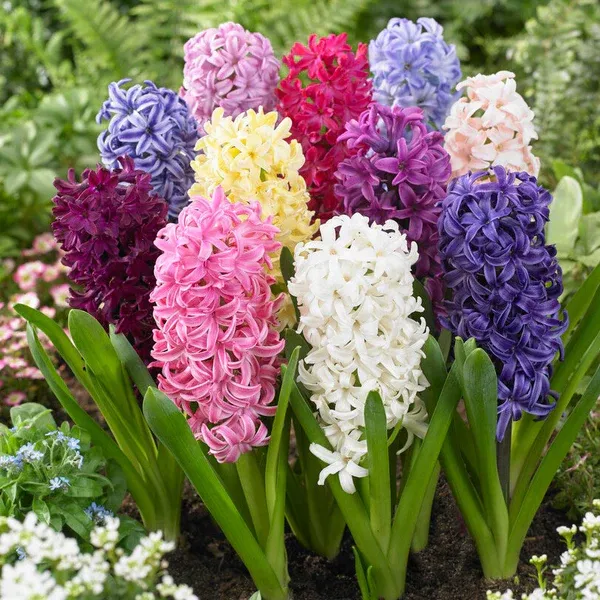
🌸 Hyacinths (Hyacinthus orientalis)
Hyacinths add something unique to the spring garden—fragrance.
Their dense flower spikes perfume the air while attracting early pollinators.
Available in:
Blue
Pink
Purple
White
Yellow
Peach
They pair beautifully with daffodils and early tulips.
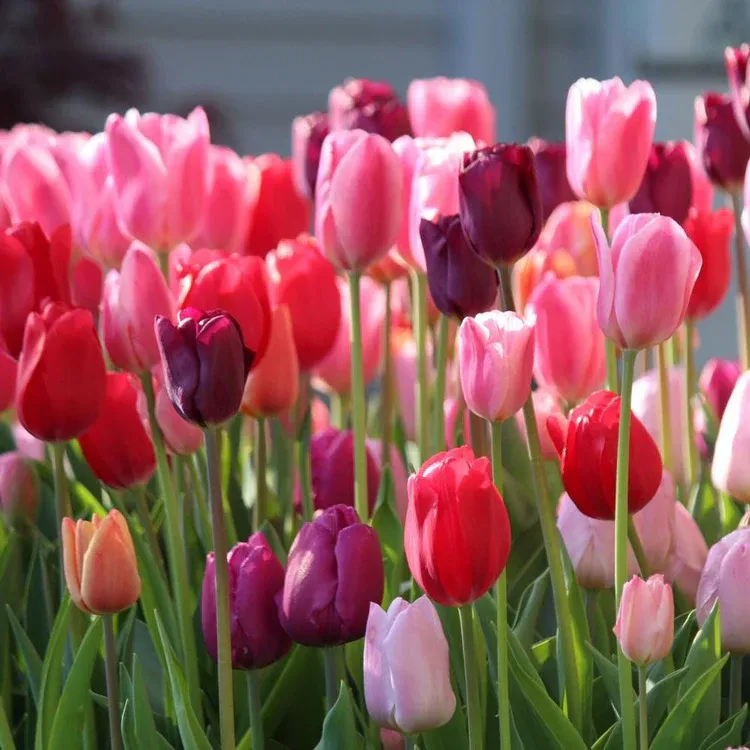
🌷 Early Tulips
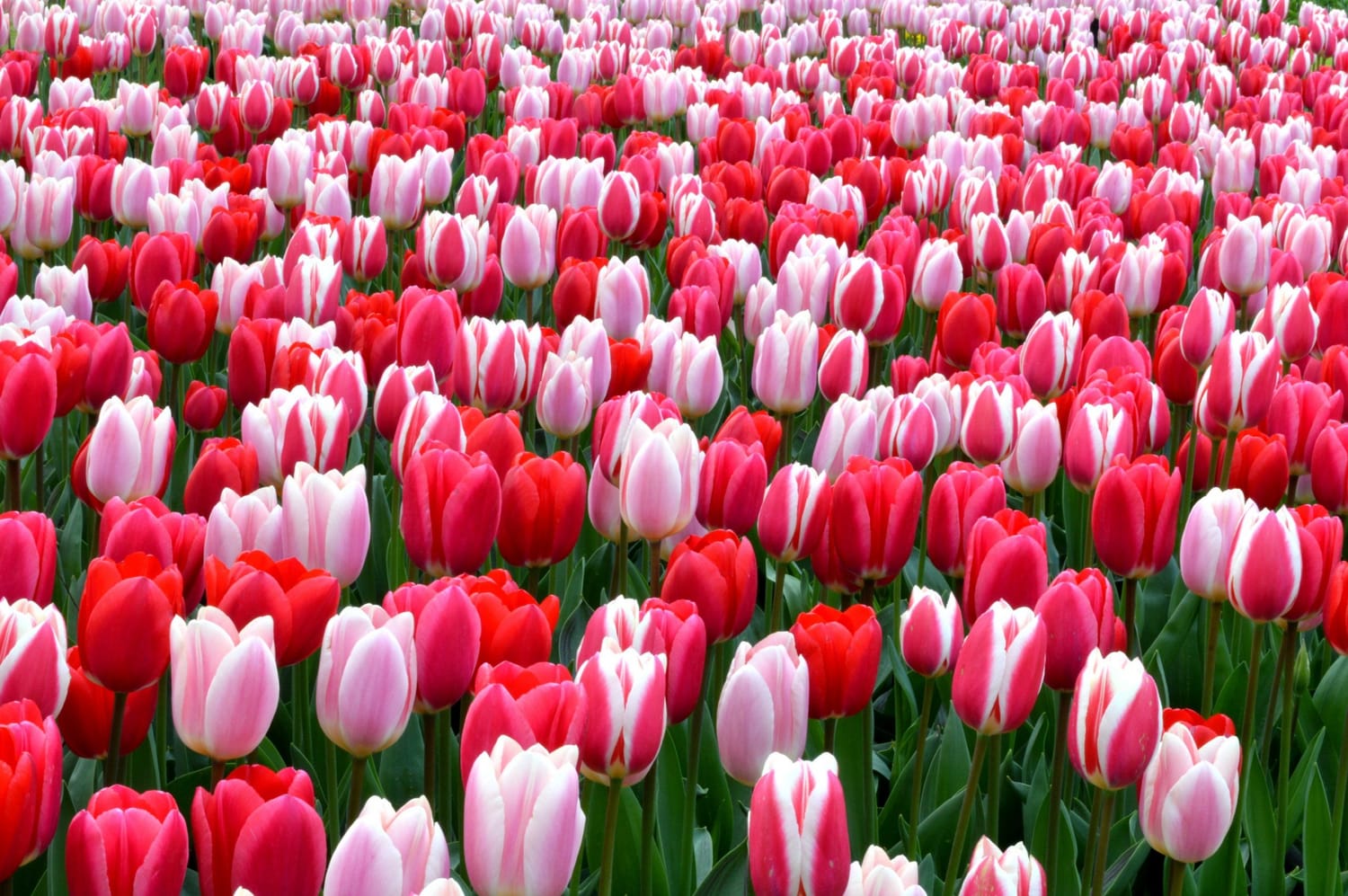
The first tulips begin flowering in April, introducing elegant cup-shaped blooms in an extraordinary range of colors.
Popular groups include:
Single Early Tulips
Double Early Tulips
Kaufmanniana Tulips
Fosteriana Tulips
These varieties provide the bridge between early and late spring.
💙 Grape Hyacinths (Muscari)
Often overlooked, grape hyacinths produce dense clusters of blue flowers that look stunning when planted beneath tulips or daffodils.
They naturalize readily and return year after year.
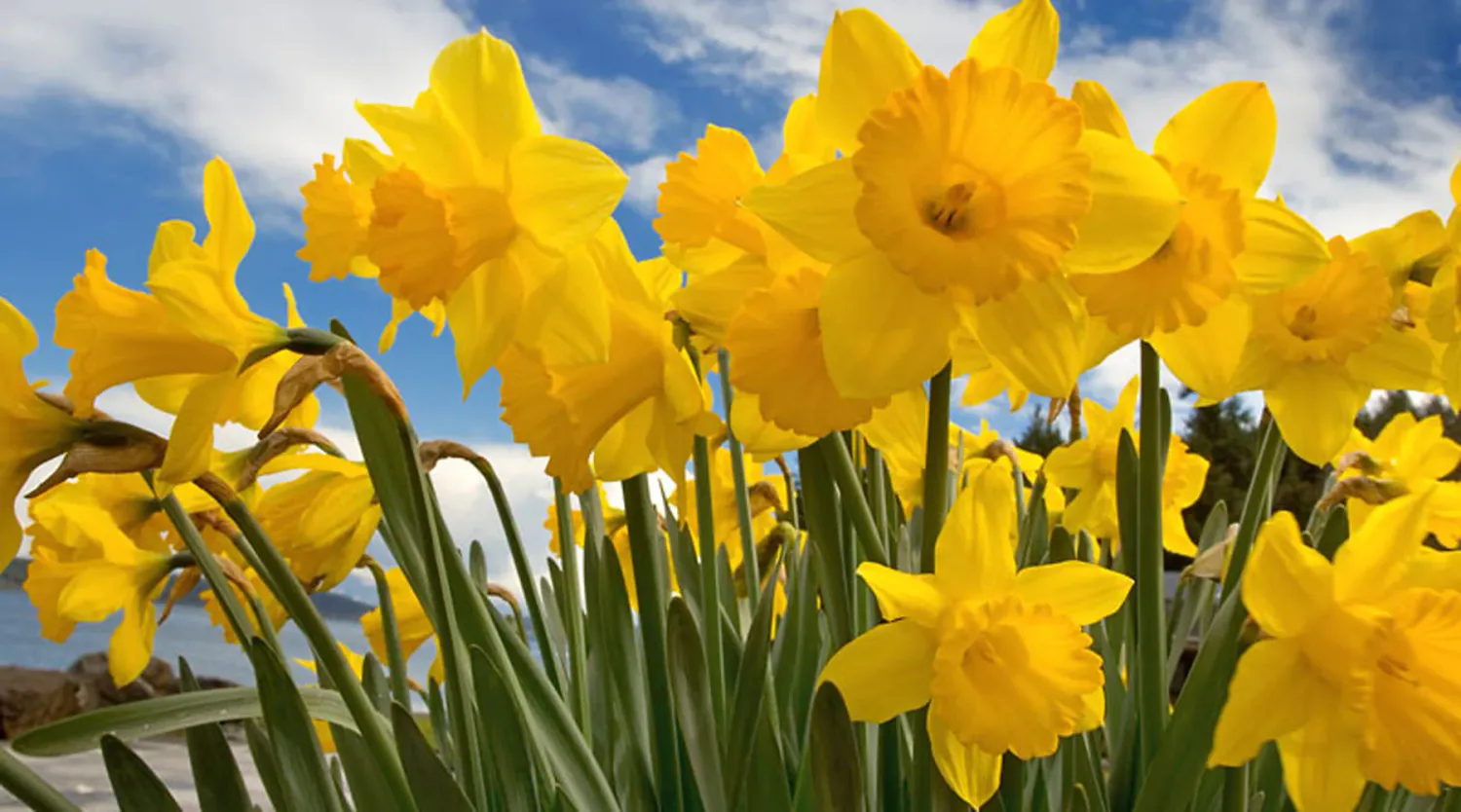
A Perfect April Combination
One of the most successful spring plantings combines:
🌼 White daffodils
🌸 Blue hyacinths
🌷 Pink tulips
💙 Grape hyacinths
The mix offers different heights, textures, fragrances, and flowering forms while creating a harmonious color palette.
🌼 Did You Know?
Many famous spring bulb displays, including those in Dutch parks and botanical gardens, are designed so that daffodils begin fading just as tulips reach their peak. This careful overlap ensures visitors always experience a garden full of color.
Late Spring (May)
By May, spring reaches its grand finale.
Large tulips dominate flower beds while elegant alliums begin lifting their spherical blooms above the surrounding foliage.
Meanwhile, the earliest summer bulbs quietly prepare to take over.
Featured Flowers
🌷 Late Tulips
Late tulips extend the tulip season well into May.
Popular groups include:
Darwin Hybrid Tulips
Triumph Tulips
Lily-Flowered Tulips
Parrot Tulips
Double Late Tulips
Together they create one of the longest flowering periods of any spring bulb.
🟣 Alliums
Alliums bring dramatic architectural beauty to the garden.
Their perfectly rounded flower heads rise above neighboring plants, adding height and structure.
Popular varieties include:
Allium giganteum
Allium 'Purple Sensation'
Allium christophii
Drumstick Alliums
These flowers are also excellent for bees and butterflies.
🌿 Camassias
Camassias are graceful North American bulbs producing elegant blue or white flower spikes.
Although less common than tulips or daffodils, they blend beautifully into naturalistic plantings.
Creating Continuous Color
Rather than planting bulbs in separate groups, think about layering the flowering season.
For example:
Snowdrops begin the display.
Crocuses add early color.
Daffodils brighten the garden.
Hyacinths introduce fragrance.
Tulips provide bold mid-season blooms.
Alliums create dramatic late-spring height.
Each flower hands the garden over to the next.
🛒 Recommended products
💡 Expert Tip
When designing borders, combine bulbs with emerging perennials such as hostas, peonies, salvias, and hardy geraniums. As bulb foliage begins to fade, the expanding perennial leaves naturally hide it, keeping the border attractive without cutting the foliage too early.
Bloom Calendar Update
Month
February
March
April
May
Main Flowering Bulbs
Snowdrops, Winter Aconites, Early Crocuses
Crocuses, Miniature Daffodils, Dwarf Iris, Scilla
Daffodils, Hyacinths, Early Tulips, Muscari
Late Tulips, Alliums, Camassias
🏆 Garden Academy Seasonal Stars
Month
February
March
April
May
Garden Academy Favorite
❄️ Snowdrops
💜 Crocuses
🌼 Daffodils & 🌸 Hyacinths
🌷 Tulips & 🟣 Alliums
🐝 Pollinator Corner
April and May are among the busiest months for pollinators. Gardens filled with overlapping blooms from daffodils, hyacinths, tulips, muscari, and alliums provide a rich variety of nectar and pollen, helping bees, butterflies, hoverflies, and many other beneficial insects thrive throughout spring.
🌿 Coming Up in Part 3
In the final section we'll explore:
🤍 June – Lilies take over
🌺 July – The grand finale of bulb season
How to design a garden with continuous blooms
Frequently Asked Questions
Garden Academy Summary
Final Thoughts
Complete Bloom Calendar
🌍 Garden Inspiration
Walk through a well-planned spring garden in May and you'll notice something remarkable: there is never a moment when the landscape feels empty. As the fragrance of hyacinths fades, tulips reach their peak, while elegant alliums begin to rise above the borders like floating purple lanterns. Great gardens aren't built around one spectacular week—they're designed so that each flower gracefully passes the spotlight to the next, creating a season that feels continuous rather than fleeting.
Early Summer (June)
As spring gradually gives way to summer, many gardeners think the bulb season has ended.
In reality, a new group of spectacular bulbs is only just beginning.
June belongs to elegant lilies and the final flowering alliums.
Together, they bridge the gap between spring bulbs and summer perennials.
Featured Flowers
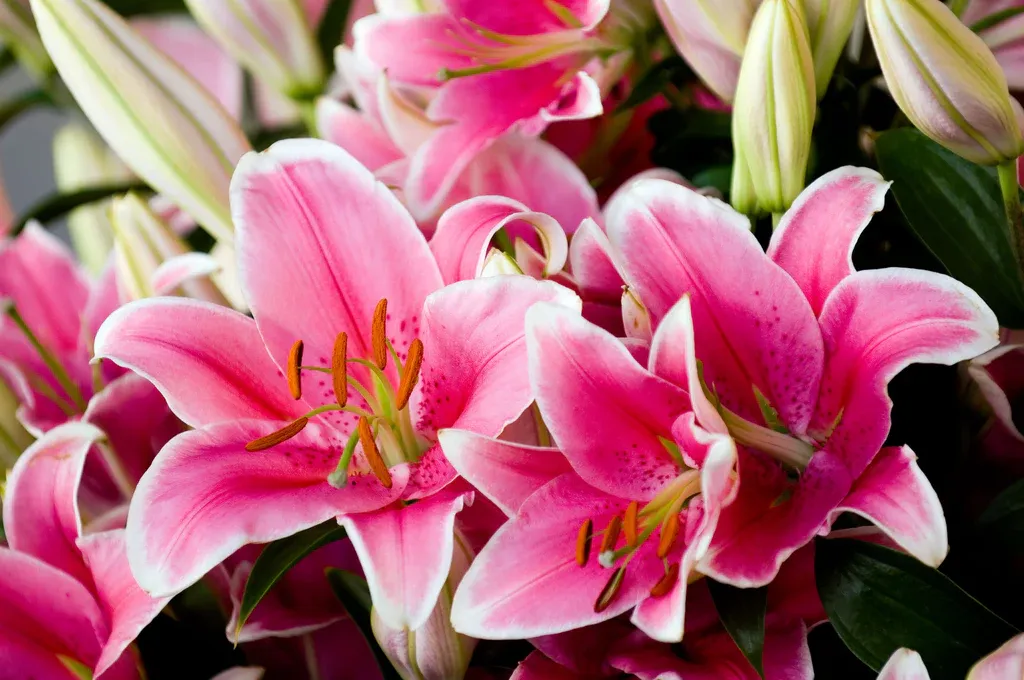
🤍 Asiatic Lilies (Lilium)
Among the earliest lilies to bloom.
They produce large upward-facing flowers in almost every color except true blue.
Popular shades include:
White
Yellow
Orange
Pink
Red
Deep burgundy
Unlike Oriental lilies, most Asiatic lilies have little or no fragrance, making them excellent choices for gardeners who prefer colorful displays without strong scents.
🟣 Late Alliums
Many ornamental onions continue flowering well into June.
Their architectural flower heads remain attractive even after blooming, providing structure and texture throughout early summer.
They combine beautifully with:
Salvias
Catmint (Nepeta)
Roses
Peonies
Hardy geraniums
🛒 Recommended products
High Summer (July)
By July, lilies become the stars of the garden.
Their large flowers rise above surrounding plants, creating dramatic displays that mark the transition from spring into full summer.
Featured Flowers
🌺 Oriental Lilies
Famous for their enormous, intensely fragrant flowers.
They bloom slightly later than Asiatic lilies and are among the most spectacular bulbs grown in gardens.
🤍 Trumpet Lilies
Elegant trumpet-shaped flowers with exceptional fragrance.
Perfect as focal points in borders.
🌸 OT Hybrid Lilies
Often called Tree Lilies, these impressive hybrids combine the beauty of Oriental lilies with the strength of Trumpet lilies.
Many reach heights of 150–200 cm (5–6½ feet) under ideal conditions.
They provide an unforgettable grand finale to the bulb season.
🌼 Did You Know?
Some lily varieties can produce more than 20 flowers on a single mature stem, creating spectacular displays that last for several weeks in early summer.
Designing a Garden That Never Stops Blooming
The secret isn't planting more flowers.
The secret is planting the right flowers at the right time.
A well-designed bulb garden follows a natural rhythm.
February
❄️ Snowdrops
💛 Winter Aconites
March
💜 Crocuses
💙 Dwarf Iris
🌼 Early Daffodils
April
🌼 Daffodils
🌸 Hyacinths
🌷 Early Tulips
💙 Muscari
May
🌷 Late Tulips
🟣 Alliums
🌿 Camassias
June
🤍 Asiatic Lilies
🟣 Late Alliums
July
🌺 Oriental Lilies
🤍 Trumpet Lilies
🌸 OT Hybrid Lilies
Instead of isolated flowering periods, your garden becomes a continuous journey through the seasons.
🛒 Recommended fertilizer for magnificent blooms
📦 PRODUCT TIP / AMAZON BOKS: Organic slow-release fertilizer for flower bulbs and perennials. 100% natural fertilizer with a balanced potassium and phosphorus content. Guaranteed strong stems, vibrant colors, and healthy bulbs.
Garden Academy Bloom Calendar
Feb
Mar
Apr
May
Jun
Jul
Snowdrops, Winter Aconites, Crocuses
Snowdrops, Crocuses, Dwarf Iris, Daffodils
Daffodils, Hyacinths, Muscari,Tulips
Muscari, Tulips, Alliums, Camassias
Alliums, Asiatic Lilies
Oriental Lilies, Trumpet Lilies, OT Hybrid Lilies
Frequently Asked Questions
Can I have flowers blooming continuously from February to July?
Yes. By combining early, mid-season, and late-flowering bulbs, you can enjoy almost six months of continuous color in many temperate climates.
Which bulbs should beginners start with?
A reliable combination includes:
Snowdrops
Crocuses
Daffodils
Hyacinths
Tulips
Alliums
This selection is easy to grow and provides a long flowering season.
Where do lilies fit into the bloom sequence?
Most garden lilies begin flowering after the spring bulb season, making them the perfect continuation of the display into early summer.
Should I plant all bulbs together?
Yes.
Many gardeners layer different bulb species in the same beds so that each takes over as the previous one finishes flowering.
This technique is often called succession planting and creates a seamless display.
Final Thoughts
A truly memorable garden is not defined by a single spectacular week of bloom.
Instead, it unfolds gradually, revealing new colors, fragrances, and textures as the seasons progress.
By planning with bloom timing in mind, you transform your garden into a living calendar.
Snowdrops greet the final days of winter.
Crocuses bring the first splashes of color.
Daffodils and hyacinths celebrate the arrival of spring.
Tulips create unforgettable displays.
Alliums add elegance and height.
Finally, lilies carry the story into summer with breathtaking flowers that bring the season to a magnificent close.
Rather than thinking about individual plants, think about the journey they create together.
That journey is what turns a collection of bulbs into an unforgettable garden.
🐝 Pollinator Corner
A garden planned around bloom succession doesn't only benefit people—it also supports wildlife. By providing nectar and pollen continuously from late winter into summer, you create a dependable food source for bees, butterflies, hoverflies, and many other beneficial insects throughout their active season.
Garden Academy Summary
Building a Continuous Bloom Garden
✅ Start with snowdrops and winter aconites.
✅ Add crocuses for the first bold colors.
✅ Introduce daffodils and hyacinths for structure and fragrance.
✅ Layer early and late tulips.
✅ Finish spring with alliums.
✅ Continue into summer with lilies.
✅ Combine bulbs with perennials for season-long beauty.
🌍 Garden Inspiration
The finest gardens don't reach perfection in a single moment—they evolve. Each week reveals a different highlight, inviting you to slow down and notice the subtle changes that mark the passing of the seasons. By planning with bloom succession in mind, you're not simply planting bulbs; you're composing a living story that begins with the first snowdrop of late winter and concludes with the magnificent lilies of midsummer.
Growing Beauty, Everywhere


Growing Beauty, Everywhere
We help you find the best flower bulbs, seeds, and tools — tailored to your region.
Get your free updates & seasonal planting guides:
This website complies with GDPR
(EU General Data Protection Regulation)
Affiliate Disclosure:This site uses affiliate links. If you make a purchase through these links, we may earn a small commission at no additional cost to you. We only recommend products we trust.
Copyright EUFiori © 2026 All rights reserved. Email