How to Grow Daffodils: Complete Planting, Care & Bloom Guide
How to Grow Daffodils: Complete Guide to Planting, Care, Varieties and Spring Blooming
Daffodils are among the first flowers to announce the arrival of spring.
Their cheerful yellow, white, orange, and bi-colored blooms brighten gardens after the long winter months and have become one of the most recognizable signs of the changing seasons.
Easy to grow, remarkably reliable, and returning year after year, daffodils are perfect for beginners as well as experienced gardeners.
Whether planted in flower beds, borders, containers, lawns, or woodland gardens, these resilient bulbs reward gardeners with weeks of colorful blooms and require very little maintenance.
In this complete guide, you'll learn everything you need to know about growing daffodils—from choosing the right bulbs and planting them correctly to caring for them after flowering and selecting the best varieties for your garden.
🍂 September–November: Plant bulbs
❄️ Winter: Root development & dormancy
🌱 Early Spring: Leaves emerge
🌼 Spring: Flowering
🌿 Late Spring: Leaves recharge the bulbs
☀️ Summer: Dormancy
Quick Answer
Daffodils grow best when bulbs are planted in autumn in well-drained soil and a sunny or partially shaded location. Most varieties bloom in early to mid-spring, require very little maintenance, and return every year with proper care. Leaving the foliage to die back naturally after flowering helps bulbs store energy for the following season.
What Are Daffodils?
Daffodils are perennial spring-flowering bulbs belonging to the genus Narcissus.
Native to Europe and parts of North Africa, they have been cultivated in gardens for centuries and today are among the world's most popular spring flowers.
The name "daffodil" commonly refers to many garden varieties, while Narcissus is the botanical name for the entire genus.
One of their greatest strengths is reliability.
Unlike some other spring bulbs that may gradually decline, daffodils often naturalize, producing larger clumps and more flowers over time when grown in suitable conditions.
Daffodil Plant Profile
Feature ...................... Details
Botanical Name ...... Narcissus
Common Name ....... Daffodil
Plant Type ................. Spring-flowering perennial bulb
Bloom Time .............. Early to late spring
Height ........................ 15–60 cm (6–24 inches)
Sun Exposure ........... Full sun to partial shade
Soil Type .................... Fertile, well-drained soil
Hardiness ................. USDA Zones 3–9 (variety dependent)
Flower Colors .......... Yellow, white, orange, cream, pink, bi-color
Difficulty ................... Easy
Why Gardeners Love Daffodils
Daffodils have remained popular for generations because they combine beauty with exceptional reliability.
Unlike many flowering plants that require frequent attention, daffodils thrive with minimal care once established.
Their benefits include:
long lifespan;
dependable spring flowering;
excellent cold tolerance;
resistance to deer and rabbits;
suitability for naturalizing;
easy maintenance;
beautiful cut flowers.
They are often among the very first flowers to bloom after winter, bringing color and optimism to gardens when little else is flowering.
The Life Cycle of a Daffodil
Understanding the annual growth cycle helps explain why proper timing is so important.
Autumn
Bulbs are planted and begin developing roots before winter arrives.
Winter
The bulbs remain dormant while cold temperatures prepare them for spring flowering.
Early Spring
Fresh green leaves emerge, followed by flower buds.
Spring
Daffodils bloom, attracting early pollinators and providing one of the first major displays of the gardening season.
Late Spring
Flowers fade, but the leaves continue collecting sunlight and storing energy inside the bulb.
Summer
The bulbs enter dormancy beneath the soil until autumn begins the cycle once again.
Where Do Daffodils Grow Best?
One reason for the worldwide popularity of daffodils is their adaptability.
They perform well in many different settings, including:
cottage gardens;
formal flower beds;
woodland gardens;
lawns;
rock gardens;
containers;
public parks;
naturalized meadows.
Given the right conditions, many daffodil varieties will multiply naturally over time.
Choosing the Best Location
Selecting the right planting location is one of the easiest ways to ensure healthy flowers.
Daffodils prefer:
✅ six or more hours of sunlight during spring;
✅ fertile, well-drained soil;
✅ protection from standing water;
✅ locations where foliage can remain undisturbed after flowering.
Although they tolerate partial shade, flowering is generally stronger in sunnier locations.
Soil Requirements
Healthy bulbs begin with healthy soil.
Daffodils prefer soil that is:
loose;
fertile;
rich in organic matter;
well drained.
Heavy clay soil can often be improved by incorporating compost or coarse sand to improve drainage.
Waterlogged soil is one of the most common causes of bulb failure.
Climate and Hardiness
Most daffodil varieties grow successfully across a wide range of climates.
They generally perform best in:
cold or cool winters;
mild springs;
well-drained growing conditions.
Many varieties are suitable for USDA Hardiness Zones 3–9, making them an excellent choice for much of North America, the United Kingdom, and many parts of Europe.
Why Daffodils Return Every Year
Unlike annual flowers that complete their life cycle in a single season, daffodils are perennial bulbs.
After flowering, the leaves continue producing energy through photosynthesis.
This energy is stored inside the bulb and used to produce next year's flowers.
When gardeners allow foliage to die back naturally, bulbs gradually rebuild their strength and often multiply over time.
🌼 Garden Academy Tip
One of the biggest advantages of daffodils is patience. A well-planted group of bulbs can continue flowering for many years, often becoming even more impressive with each passing spring.
🛒 Recommended products
Coming Up Next
In the next section of this guide, we'll explore:
the best time to plant daffodil bulbs;
how deep to plant them;
correct spacing;
step-by-step planting instructions;
common planting mistakes to avoid.
When to Plant Daffodil Bulbs
Timing is one of the most important factors in successful daffodil growing.
Like tulips and hyacinths, daffodils need a period of cold temperatures before they can produce strong spring flowers. Planting them at the correct time allows roots to establish before winter arrives.
Daffodil bulbs should be planted in autumn, allowing them enough time to develop strong roots before winter arrives.
Best Planting Time by Region
The exact planting period depends on your climate, but the general rule is simple:
Plant daffodil bulbs when soil temperatures begin to cool but before the ground freezes.
United Kingdom
The ideal planting period is:
September to November.
Northern United States (Zones 3–6)
Plant bulbs from:
September to October.
Southern United States (Zones 7–9)
Plant from:
October to December.
Continental Europe
Most gardeners plant daffodils during:
October and November.
The goal is simple:
Plant bulbs while the soil is cool but before it freezes solid.
Why Daffodils Need Winter Chilling
Daffodil bulbs contain miniature flower buds inside them. Exposure to cold winter temperatures triggers the hormonal changes that allow those buds to develop into healthy spring flowers.
Without adequate chilling, plants may:
produce weak flowers;
bloom irregularly;
develop only foliage;
flower poorly in warm climates.
Fortunately, most daffodil varieties receive enough natural chilling in the UK, northern Europe, and much of North America.
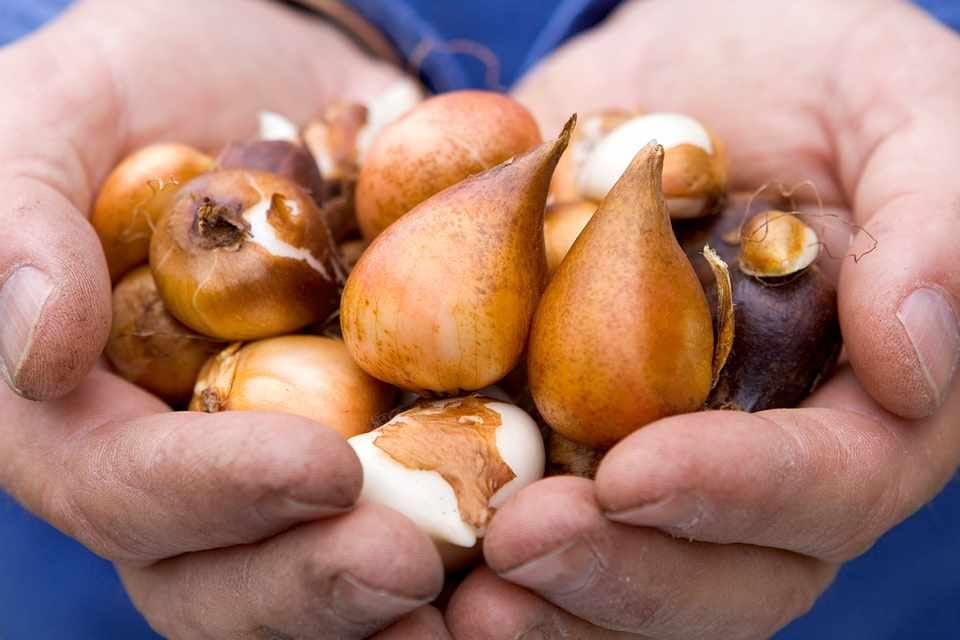
Choosing Healthy Daffodil Bulbs
The quality of the bulb largely determines the quality of the flowers.
Look for bulbs that are:
✅ large and firm
✅ heavy for their size
✅ free from mold
✅ free from soft spots
✅ undamaged and dry on the outside
Avoid bulbs that feel soft, smell unpleasant, or show signs of rot.
How Deep to Plant Daffodil Bulbs
Correct planting depth is essential for strong roots, sturdy stems, and reliable flowering.
A useful rule is:
Plant bulbs at a depth approximately 2–3 times the height of the bulb.
For most garden daffodils, this means:
10–15 cm (4–6 inches) deep.
Larger trumpet varieties may be planted slightly deeper, while miniature daffodils can be planted a little shallower.
How Far Apart Should Daffodils Be Planted?
Proper spacing allows bulbs to multiply naturally without becoming overcrowded too quickly.
Recommended spacing:
10–15 cm (4–6 inches) between bulbs.
For naturalized drifts, plant bulbs in irregular groups rather than straight rows. This creates a much more natural garden appearance.
Step-by-Step Daffodil Planting Guide
Step 1: Prepare the Soil
Loosen the soil to a depth of at least 20–25 cm (8–10 inches). Remove weeds, stones, and compacted debris. Mix in compost if the soil is poor.
Step 2: Dig the Planting Hole
Dig individual holes or a wider planting area deep enough to position bulbs at the correct depth.
Step 3: Position the Bulbs
Place each bulb with:
the pointed tip facing upward;
the flatter root plate facing downward.
If a bulb is accidentally planted sideways, it will often correct itself naturally, but proper orientation helps it establish more efficiently.
Step 4: Cover with Soil
Gently refill the hole with soil and lightly firm the surface. Avoid compacting the soil too heavily, as roots need air spaces to develop properly.
Step 5: Water After Planting
Water thoroughly once after planting. This helps settle the soil around the bulbs and encourages early root growth before winter.
After this initial watering, rainfall is usually sufficient in most climates.
Planting Daffodils for Naturalizing
One of the greatest advantages of daffodils is their ability to naturalize. Over time, a small planting can develop into a large flowering colony.
To create a naturalized effect:
scatter bulbs randomly across the area;
plant them where they land;
use groups of at least 10–20 bulbs;
avoid perfect geometric patterns.
Lawns, woodland edges, orchards, and meadows are excellent locations for naturalized daffodil displays.
Common Planting Mistakes to Avoid
Many daffodil problems begin at planting time. Avoid these common mistakes:
❌ Planting in waterlogged soil
❌ Planting bulbs upside down
❌ Planting too shallow
❌ Planting too late in winter
❌ Using soft or damaged bulbs
❌ Overcrowding bulbs in small spaces
🌼 Garden Academy Tip
If you can only do one thing right, focus on drainage.
Daffodils tolerate cold, shade, and even occasional neglect surprisingly well, but they dislike sitting in wet soil for long periods.
Quick Planting Checklist
Before you finish planting, check that you have:
✅ Chosen healthy bulbs
✅ Planted in autumn
✅ Used well-drained soil
✅ Positioned bulbs tip-up
✅ Planted 10–15 cm deep
✅ Spaced bulbs 10–15 cm apart
✅ Watered after planting
Coming Up Next
In the next section, we'll cover:
watering and seasonal care;
fertilizing daffodils;
caring for foliage after flowering;
growing daffodils in containers;
how to encourage larger clumps and more flowers every year.
Watering, Feeding and Seasonal Care for Daffodils
One of the reasons daffodils have remained popular for centuries is their ability to thrive with very little maintenance.
Once established, they require only occasional watering and minimal feeding, making them one of the easiest spring bulbs to grow.
However, providing the right care at the right time will help produce healthier bulbs, stronger flowers, and more impressive displays year after year.
How Often Should You Water Daffodils?
Newly planted bulbs should be watered thoroughly after planting to help settle the soil and encourage root development.
During autumn and winter, natural rainfall is usually sufficient in most climates.
As growth begins in spring, keep the soil lightly moist but never waterlogged.
Established daffodils are surprisingly drought tolerant once flowering has finished.
Can You Overwater Daffodils?
Yes.
Too much water is one of the few things daffodils dislike.
Bulbs sitting in constantly wet soil may suffer from:
bulb rot;
fungal diseases;
poor root development;
reduced flowering.
If your soil remains wet after heavy rain, consider improving drainage before planting additional bulbs.
🛒 Recommended fertilizer for magnificent blooms
📦 PRODUCT TIP / AMAZON BOKS: Organic slow-release fertilizer for flower bulbs and perennials. 100% natural fertilizer with a balanced potassium and phosphorus content. Guaranteed strong stems, vibrant colors, and healthy bulbs.
Fertilizing Daffodils
Daffodils are not heavy feeders, but they do appreciate nutrient-rich soil.
In fertile garden beds, compost is often enough to support healthy growth.
Where soil quality is poor, apply a balanced bulb fertilizer:
when shoots first emerge in spring;
immediately after flowering while the leaves are still green.
Avoid fertilizers with excessive nitrogen, as they encourage leafy growth instead of strong bulbs.
Seasonal Care Calendar
Understanding what your daffodils need throughout the year makes caring for them much easier.
Autumn
Plant healthy bulbs.
Water after planting.
Apply mulch in colder regions if necessary.
Winter
Daffodils remain dormant underground.
Very little maintenance is required during this period.
Avoid disturbing planting areas unnecessarily.
Spring
This is the main growing and flowering season.
Your tasks include:
watering during prolonged dry periods;
removing weeds;
enjoying the flowers.
Allow plants to receive as much sunlight as possible.
After Flowering
Once blooms fade:
remove spent flowers;
leave all green foliage intact;
continue watering moderately.
The leaves continue producing food for next year's flowers.
Summer
As the foliage naturally dies back, the bulbs enter dormancy.
At this stage:
stop watering;
remove dry leaves;
leave bulbs in the ground or lift them for storage if necessary.
Why Daffodil Leaves Should Never Be Cut Too Early
One of the most common mistakes gardeners make is removing daffodil leaves immediately after flowering.
Although the foliage may appear untidy, it plays a vital role in the bulb's health.
The leaves act like natural solar panels, converting sunlight into energy that is stored inside the bulb.
Cutting green leaves too soon can lead to:
fewer flowers next spring;
weaker bulbs;
reduced flowering over time.
Wait until the foliage has turned completely yellow or brown before removing it.
Deadheading Daffodils
Removing faded flowers prevents the plant from putting energy into seed production.
Simply cut off the spent flower head while leaving the stem and leaves untouched.
This allows more energy to return to the bulb.
Mulching Around Daffodils
A light layer of mulch can help:
retain soil moisture;
suppress weeds;
regulate soil temperature;
protect bulbs during severe winter weather.
Organic mulches such as shredded bark or compost work well and gradually improve soil quality as they decompose.
Do Daffodils Need Dividing?
Over time, daffodil bulbs naturally multiply underground.
While this is generally a good thing, overcrowding can eventually reduce flowering.
If clumps become crowded, lift and divide the bulbs after the foliage has completely died back.
Replant healthy bulbs with adequate spacing to encourage vigorous growth.
What Are "Blind Daffodils"?
A "blind daffodil" is a plant that produces healthy leaves but no flowers.
This is one of the most frequently asked questions among gardeners.
Common causes include:
bulbs planted too shallow;
overcrowded clumps;
too much shade;
cutting leaves too early in previous years;
lack of nutrients.
Fortunately, blind daffodils can often recover once growing conditions are improved.
🌼 Garden Academy Tip
Healthy daffodils are built during the weeks after flowering—not while they are in bloom.
Giving bulbs time to recharge each spring is the secret to beautiful displays year after year.
Signs of Healthy Daffodils
Well-grown daffodils usually have:
upright flower stems;
vibrant flower color;
healthy green foliage;
firm bulbs;
consistent spring flowering.
If your daffodils display these characteristics, you're providing the ideal growing conditions.
Coming Up Next
In the next section, we'll explore the incredible diversity of daffodils, including:
the most popular varieties;
flower shapes;
colors;
bloom times;
and how to choose the perfect daffodils for your garden.
Best Daffodil Varieties: Colors, Shapes and Blooming Types
One of the greatest advantages of daffodils is their incredible diversity.
Although many people imagine only the classic yellow trumpet daffodil, there are actually more than 30,000 registered cultivars and thousands of garden hybrids available today.
Daffodils come in a wide range of colors, flower shapes, sizes, and blooming times, allowing gardeners to create stunning spring displays that last for weeks.
Whether you prefer traditional yellow flowers, elegant white blooms, delicate pink cups, or dramatic double flowers, there is a daffodil variety for every garden.
Quick Answer
Some of the best daffodil varieties include Dutch Master, King Alfred, Mount Hood, Ice Follies, Tête-à-Tête, Pink Charm, and Tahiti. Choosing early, mid, and late-season varieties allows gardeners to enjoy daffodil flowers over a much longer period.
Understanding Daffodil Classification
Not all daffodils look alike.
The genus Narcissus includes many different flower forms that vary in size, petal shape, trumpet length, and color combinations.
Garden daffodils are officially divided into several groups by the Royal Horticultural Society (RHS), but home gardeners usually choose them based on appearance and flowering time.
1. Dutch Master
The Classic Golden Daffodil
Dutch Master is one of the world's most popular daffodils.
Its large golden-yellow trumpet flowers have become the symbol of spring in many gardens.
Characteristics:
Bright yellow petals
Large central trumpet
Height: 40–45 cm (16–18 inches)
Early to mid-spring flowering
Best for:
borders;
mass planting;
naturalizing;
public gardens.
2. King Alfred
A Historic Favorite
King Alfred has been admired for generations because of its large flowers and dependable performance.
Although many modern cultivars have replaced the original selection, the name is still widely associated with classic yellow daffodils.
Ideal for:
traditional gardens;
cottage landscapes;
woodland planting.
3. Mount Hood
Elegant White Daffodil
Mount Hood begins flowering with creamy-white petals before maturing into a brilliant white bloom.
It is one of the finest white daffodils available.
Characteristics:
Pure white flowers
Large trumpet
Excellent cut flower
Strong perennial performance
4. Ice Follies
Cream and White Beauty
Ice Follies combines creamy-yellow cups with broad white petals.
As the flower matures, the center gradually becomes almost white.
This elegant color transition makes it one of the most admired spring varieties.
5. Tête-à-Tête
The Perfect Miniature Daffodil
One of the best-selling miniature daffodils in the world.
Its compact growth makes it ideal for:
containers;
balconies;
window boxes;
rock gardens.
Despite its small size, it produces numerous cheerful yellow flowers.
6. Pink Charm
A Rare Touch of Pink
Pink daffodils are relatively uncommon.
Pink Charm is prized for its soft white petals surrounding a delicate salmon-pink cup.
It brings elegance and uniqueness to spring borders.
7. Tahiti
Double-Flowered Showstopper
Tahiti is famous for its dramatic double blooms.
Rich golden petals mixed with orange-red centers create an eye-catching display.
Perfect for gardeners looking for something unusual.
Choosing Daffodils by Bloom Time
Combining different flowering periods extends the beauty of your garden.
Early Season
Tête-à-Tête
Dutch Master
Mid-Season
Ice Follies
Mount Hood
Late Season
Pink Charm
Tahiti
Planting a mix of these varieties can provide continuous flowers for six weeks or more.
Choosing Daffodils by Garden Style
Cottage Gardens
Recommended:
Dutch Master
King Alfred
Ice Follies
These natural-looking varieties blend beautifully with tulips, grape hyacinths, and forget-me-nots.
Formal Gardens
Choose:
Mount Hood
Pink Charm
Their elegant flowers create clean, symmetrical displays.
Containers and Patios
Best choices:
Tête-à-Tête
Ice Follies
Compact varieties are easy to grow in pots and brighten balconies and entrances.
Naturalized Meadows
For lawns and woodland gardens, choose vigorous varieties that multiply reliably over time.
Excellent options include:
Dutch Master
King Alfred
Tête-à-Tête
Creating Beautiful Color Combinations
Daffodils pair beautifully with other spring bulbs.
Some classic combinations include:
🌼 Yellow Daffodils + Blue Hyacinths
The strong contrast creates a vibrant spring display.
🌼 White Daffodils + Pink Tulips
An elegant and romantic planting scheme.
🌼 Cream Daffodils + Purple Crocuses
Perfect for woodland gardens and early-season borders.
Which Daffodils Are Best for Beginners?
If you're planting daffodils for the first time, these varieties are among the easiest and most rewarding:
Dutch Master
Tête-à-Tête
Ice Follies
Mount Hood
They are reliable, hardy, and require very little maintenance.
🌼 Garden Academy Tip
Instead of planting just one variety, combine early-, mid-, and late-season daffodils.
This simple technique can extend your spring display by several weeks while adding more color and interest to your garden.
Coming Up Next
In the next section, we'll cover one of the most important topics in daffodil care:
What to do after flowering—including deadheading, caring for the foliage, dividing bulbs, and ensuring your daffodils return with even more blooms next spring.
🌷 The Complete Guide to Tulip Bulbs: Planting, Growing, Care and Storage
🌸 How to Grow Hyacinths: Complete Guide to Planting, Care, Varieties, and Beautiful Spring Flowers
🌼 How to Grow Daffodils: Complete Guide to Planting, Care, Varieties and Spring Blooming
🌷🌸 Hyacinths vs Tulips: Differences, Growing Guide and Which Spring Bulb Is Better
What To Do After Daffodils Finish Flowering
One of the most common questions gardeners ask is:
"What should I do after my daffodils finish blooming?"
The answer is surprisingly simple.
The weeks following flowering are just as important as the flowering period itself.
During this time, the bulb is storing energy that will produce next year's flowers.
Proper after-flowering care is the secret to healthy bulbs and beautiful spring displays year after year.
Step 1: Remove Spent Flowers
Once the blooms begin to fade, remove the flower heads.
This process, known as deadheading, prevents the plant from producing seeds.
Instead of wasting energy on seed production, the bulb redirects its resources toward storing nutrients for the following season.
Remove only the faded flower.
Leave the stem and foliage untouched.
Step 2: Leave the Leaves Alone
This is the most important rule of daffodil care.
Even though the foliage may no longer look attractive, it continues working.
The leaves capture sunlight through photosynthesis and convert it into energy stored inside the bulb.
Cutting green leaves too early often leads to:
fewer flowers next spring;
weaker bulbs;
smaller blooms;
poor naturalization.
Allow the foliage to turn completely yellow or brown before removing it.
Step 3: Reduce Watering Naturally
As the foliage begins to die back, gradually reduce watering.
The bulbs are preparing for dormancy and no longer need regular moisture.
Avoid keeping the soil wet during summer, as excessive moisture can increase the risk of bulb rot.
Step 4: Should You Lift the Bulbs?
In most gardens, daffodil bulbs can remain in the ground for many years.
However, lifting bulbs may be helpful if:
flowering becomes less impressive;
clumps become overcrowded;
you want to divide and replant them;
you are redesigning the garden.
Lift bulbs only after the foliage has completely died back.
Store them in a cool, dry, and well-ventilated place until autumn planting.
Do Daffodils Multiply?
Yes.
One of the greatest advantages of daffodils is their ability to multiply naturally.
Healthy bulbs gradually produce offsets that develop into new flowering bulbs.
Over time, a small planting can become a spectacular spring display with very little effort.
This process is called naturalizing, and daffodils are among the best bulbs for it.
Frequently Asked Questions
Do daffodils come back every year?
Yes.
Most daffodils are perennial bulbs and will return every spring when planted in suitable conditions and cared for properly.
How long do daffodils bloom?
Most varieties flower for 2–6 weeks, depending on the weather and the combination of early-, mid-, and late-season cultivars.
Can daffodils grow in shade?
Yes, but flowering is generally better in locations that receive at least six hours of sunlight during spring.
Light afternoon shade is usually well tolerated.
Are daffodils poisonous?
Yes.
All parts of the plant, especially the bulbs, contain compounds that are toxic if eaten.
For this reason, keep bulbs away from children and pets, and always wear gloves if you have sensitive skin when handling large numbers of bulbs.
(We'll cover this topic in much greater detail in our dedicated guide: Are Daffodils Poisonous?)
Why didn't my daffodils flower this year?
The most common reasons include:
bulbs planted too shallow;
too much shade;
overcrowding;
leaves removed too early in previous years;
insufficient nutrients.
Improving growing conditions usually restores flowering over time.
Final Thoughts
Daffodils have earned their place among the world's favorite spring flowers for good reason.
They are beautiful, dependable, easy to grow, and capable of returning year after year with minimal care.
Whether you're planting your very first bulbs or expanding an established garden, daffodils offer one of the most rewarding gardening experiences available.
By choosing healthy bulbs, planting them at the right time, providing good drainage, and allowing the foliage to mature naturally after flowering, you'll enjoy brighter and more abundant displays every spring.
Sometimes, the simplest flowers create the most lasting memories.
🌼 Garden Academy Tip
Plant daffodils once, care for them wisely, and they may reward your garden with cheerful spring blooms for decades.
Continue Your Spring Bulb Academy Journey
If you enjoyed this guide, explore our other in-depth gardening resources:
🌼 When to Plant Daffodil Bulbs: Complete Timing Guide
🌼 Growing Daffodils in Pots: Container Gardening Made Easy
🌼 Best Daffodil Varieties for Every Garden
🌼 Daffodils After Flowering: Complete Care Guide
🌼 Common Daffodil Problems and How to Fix Them
🌼🌷 Daffodils vs Tulips: Which Spring Bulb Is Right for You?
🌸🌷 Hyacinths vs Tulips: Differences, Growing Guide and Which Spring Bulb Is Better
Final Checklist for Growing Healthy Daffodils
Before you finish, here's a quick recap:
✅ Plant bulbs in autumn.
✅ Choose a sunny or lightly shaded location.
✅ Use fertile, well-drained soil.
✅ Water after planting, then only as needed.
✅ Feed lightly in spring if necessary.
✅ Remove faded flowers but keep the leaves.
✅ Allow foliage to die back naturally.
✅ Divide overcrowded clumps every few years.
✅ Enjoy bigger and better displays each spring.
Growing Beauty, Everywhere


Growing Beauty, Everywhere
We help you find the best flower bulbs, seeds, and tools — tailored to your region.
Get your free updates & seasonal planting guides:
This website complies with GDPR
(EU General Data Protection Regulation)
Affiliate Disclosure:This site uses affiliate links. If you make a purchase through these links, we may earn a small commission at no additional cost to you. We only recommend products we trust.
Copyright EUFiori © 2026 All rights reserved. Email