Growing Tulips in Pots: Complete Container Gardening Guide
Growing Tulips in Pots:
Complete Guide for Beautiful Container Gardens
Tulips are usually associated with colorful spring gardens and large flower beds, but these beautiful spring bulbs can also thrive in containers, pots, and balcony planters.
Growing tulips in pots is an excellent solution for gardeners who have limited outdoor space or want to create seasonal displays on patios, balconies, terraces, and entrances.
With the right container, suitable soil, proper planting depth, and a little care, you can enjoy stunning tulip blooms even without a traditional garden.
This complete guide explains everything you need to know about growing tulips in pots, from choosing the best containers and planting bulbs to caring for them throughout the season.
Quick Answer
Yes, tulips grow very well in pots and containers. Choose a container with good drainage, plant bulbs in autumn, use well-draining soil, and place the pot in a location with enough sunlight. With proper care, container-grown tulips can produce beautiful spring flowers just like garden-planted bulbs.
Quick Facts: Growing Tulips in Pots
Feature .......................... Details
Best Planting Time ..... Autumn
Bloom Season .............. Spring
Container Size .............. 20–30 cm (8–12 inches) deep minimum
Sunlight .......................... Full sun
Soil .................................. Well-draining potting mix
Watering ......................... Moderate
Best For .......................... Balconies, patios, small gardens
Can Tulips Grow in Pots?
Absolutely.
Tulip bulbs naturally grow in the ground, but containers can provide excellent growing conditions when prepared correctly.
Many gardeners actually prefer growing tulips in pots because containers offer several advantages:
easier control of soil quality;
better protection from pests;
flexible garden design;
ability to move displays around;
perfect solution for small spaces.
Container gardening also allows you to experiment with different colors and varieties without redesigning an entire garden bed.
Why Grow Tulips in Containers?
There are many reasons gardeners choose pots instead of traditional planting.
Perfect for Small Spaces
If you live in an apartment or have only a balcony, containers allow you to enjoy spring flowers without needing a large garden.
A few attractive pots filled with tulips can completely transform an outdoor space.
Easier Design Control
Containers make it simple to create specific color themes.
You can combine:
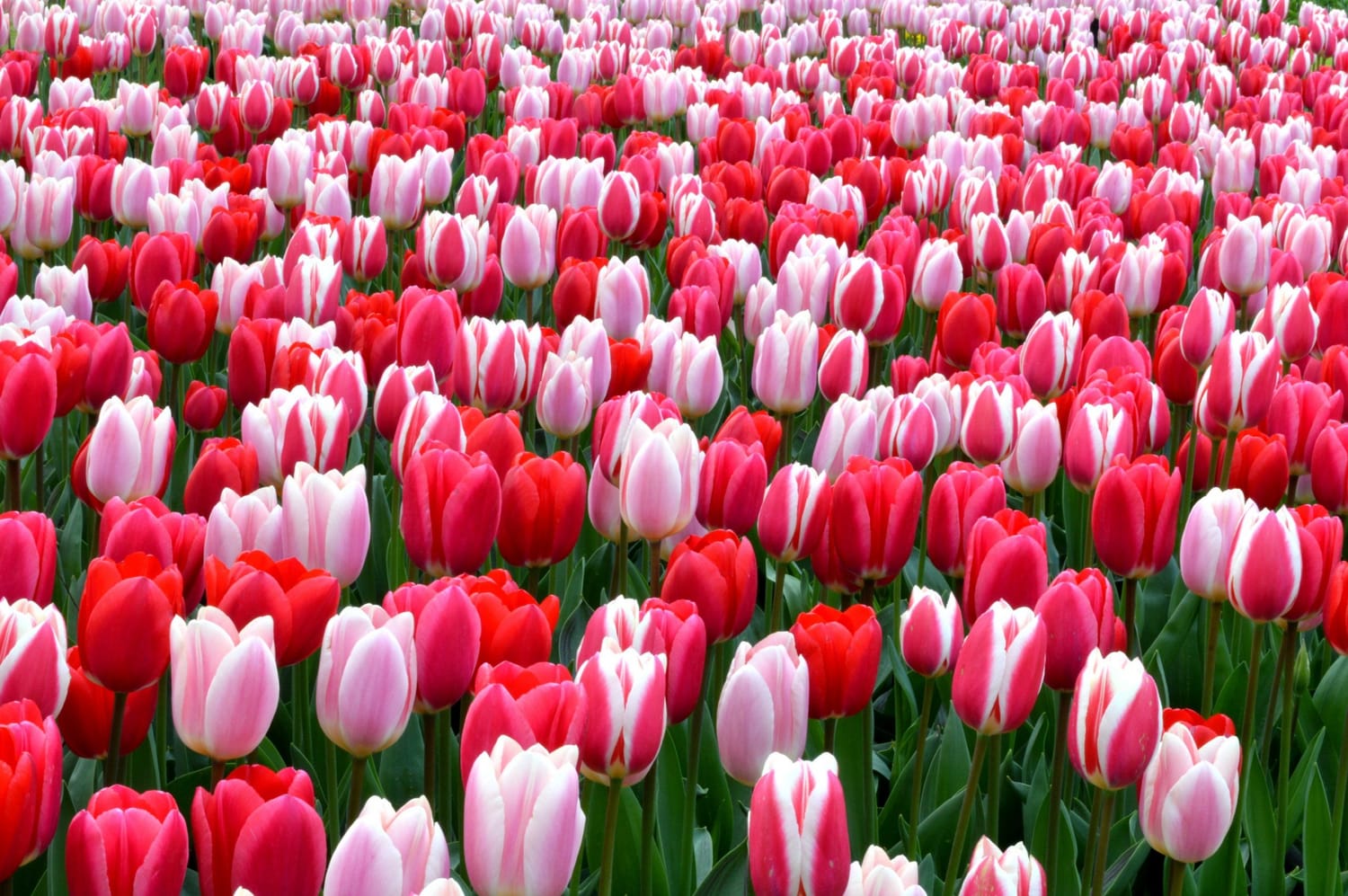
pink and white tulips for an elegant look;
red and yellow tulips for a traditional spring display;
purple and white tulips for a sophisticated combination.
Better Seasonal Decoration
Tulip pots can be placed near:
entrances;
patios;
balconies;
windows;
outdoor seating areas.
They create an instant seasonal decoration when flowers appear.
Choosing the Right Container for Tulips
The container is one of the most important factors for success.
Tulip bulbs dislike constantly wet soil, so good drainage is essential.
How Deep Should a Tulip Pot Be?
Choose containers that are:
at least 20–30 cm (8–12 inches) deep;
wide enough for several bulbs;
equipped with drainage holes.
Larger containers are usually better because they:
hold moisture more consistently;
protect roots from temperature changes;
allow more bulbs to grow together.
Best Materials for Tulip Containers
Tulips can grow successfully in many types of pots.
Terracotta Pots
Advantages:
beautiful natural appearance;
excellent airflow;
classic garden style.
Disadvantage:
dries out faster than plastic containers.
Plastic Containers
Advantages:
lightweight;
affordable;
retain moisture well.
Choose strong containers with good drainage.
Wooden Planters
Wooden containers can create a beautiful natural display and are especially attractive on patios and terraces.
🌷 Expert Tip
Avoid containers without drainage holes. Excess water is one of the most common reasons tulip bulbs fail in pots.
Continue Your Garden Academy Journey
Explore more expert guides:
🌷 The Complete Guide to Tulip Bulbs
🌷 Best Tulip Varieties
🌷 How Deep to Plant Tulip Bulbs
🌷 Growing Tulips in Pots
🌷 Tulips After Flowering
🌷 How to Store Tulip Bulbs After Flowering
🌷 Common Tulip Growing Problems
🌷 Buy Tulip Bulbs Online vs Local Stores | What’s Better?
🌷 Where to Buy Flower Bulbs Online (USA, UK & Europe Guide)
🌷 When to Plant Tulip Bulbs (Complete Guide for Beginners)
🌷 When To Plant Tulip Bulbs: Complete Guide for US and UK Gardeners
Choosing the Best Soil for Tulips in Pots
The success of container-grown tulips depends greatly on the quality of the soil.
Unlike garden beds, pots have limited space, which means the soil must provide everything the bulbs need:
good drainage;
enough nutrients;
proper air circulation;
balanced moisture.
Tulips do not like wet, heavy soil. The biggest enemy of tulip bulbs in containers is excess water, which can lead to bulb rot.
🛒 Looking to start?
Check out the best tulip bulb packages on Amazon for fall planting
The Ideal Soil Mix for Tulips in Containers
A good potting mix for tulips should be:
✅ light and loose
✅ rich in organic matter
✅ well-draining
✅ able to hold some moisture without becoming soggy
A simple container mix can include:
50% quality potting soil;
30% compost or organic matter;
20% perlite, grit, or coarse sand for drainage.
This creates a growing environment where roots can develop while preventing water from staying around the bulbs.
Should You Use Garden Soil in Tulip Pots?
It is usually not recommended to fill containers with ordinary garden soil.
Garden soil can become:
too compact;
poorly drained;
heavy inside containers.
When soil becomes compressed, tulip roots struggle to grow and bulbs may remain too wet.
For best results, always use a high-quality container planting mix.
How Many Tulip Bulbs Should You Plant in One Pot?
One of the most common questions among container gardeners is:
How many tulip bulbs fit in one container?
The answer depends on the size of the pot.
General recommendations:
Container ................................... Size Number of Tulip Bulbs
15 cm (6 inch) pot ..................... 3–5 bulbs
20–25 cm (8–10 inch) pot ........ 5–7 bulbs
30 cm (12 inch) pot ................... 8–12 bulbs
Large planter ............................. 15 + bulbs
For a spectacular spring display, tulips can be planted closer together in containers than in traditional garden beds.
How Far Apart Should Tulip Bulbs Be in Pots?
Unlike garden planting, where bulbs need more space to multiply, container displays are usually designed for maximum visual impact.
A good guideline:
leave approximately 2–5 cm (1–2 inches) between bulbs;
place bulbs close together but not touching;
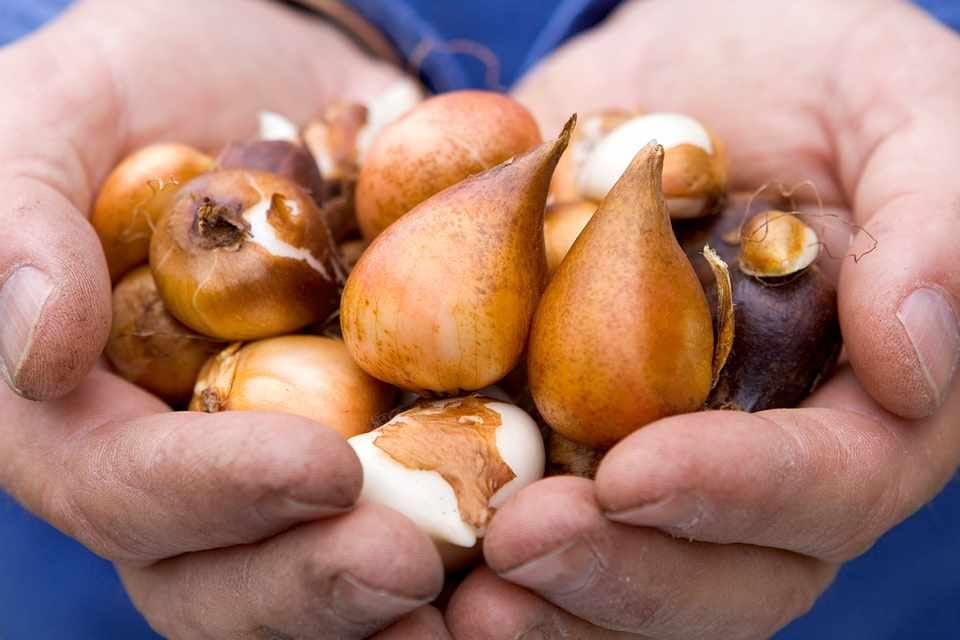
arrange bulbs with the pointed side facing upward.
Dense planting creates a fuller and more impressive flower display.
How Deep Should Tulip Bulbs Be Planted in Containers?
Planting depth is very important.
Tulip bulbs should usually be planted:
2–3 times deeper than the height of the bulb.
For most tulip bulbs in containers:
approximately 10–15 cm (4–6 inches) deep.
Make sure there is enough soil beneath the bulbs so roots can develop properly.
A common mistake is planting bulbs too shallow because the container looks full.
Step-by-Step: How to Plant Tulip Bulbs in Pots
Follow these simple steps for the best results.
Step 1: Choose a Container With Drainage
Before adding soil, check that your pot has drainage holes.
If necessary, place a thin layer of gravel or broken pottery pieces at the bottom to improve drainage.
Step 2: Add the First Layer of Soil
Fill the container with enough soil so that bulbs will sit at the correct depth.
Step 3: Place the Tulip Bulbs
Position bulbs:
pointed side upward;
flat root side downward.
Arrange them evenly to create a balanced display.
Step 4: Cover With Soil
Add soil until the bulbs are completely covered.
Gently press the soil down, but avoid compacting it too firmly.
Step 5: Water Thoroughly
After planting:
water the container well;
allow excess water to drain;
place the pot in its growing location.
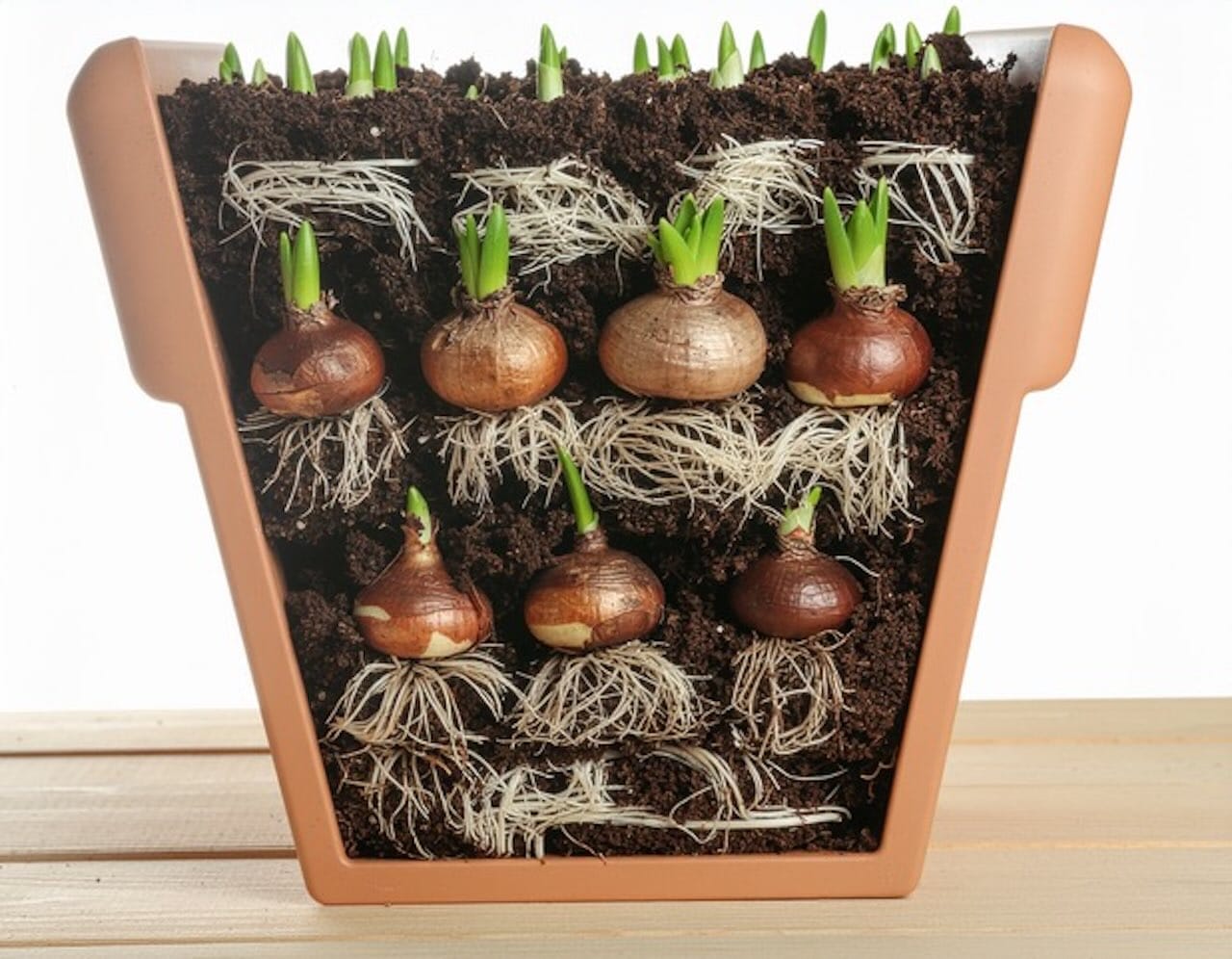
The "Lasagna Planting" Method for Tulip Pots
One of the most exciting techniques for container gardeners is called lasagna planting.
This method involves planting different bulbs in layers to create a longer flowering display.
For example:
Bottom Layer
Late-flowering tulip varieties.
Middle Layer
Mid-season tulips.
Top Layer
Early-flowering bulbs.
As spring arrives, different flowers emerge one after another, creating a continuous display.
This technique is especially popular for:
balconies;
patios;
entrance decorations;
small urban gardens.
Tip: To get massive blooms next spring, don't forget to fertilize your bulbs. Check out our Complete Bulb Fertilizer Guide
🌷 Expert Tip
Large containers are perfect for experimenting with bulb combinations.
Try mixing tulips with daffodils, crocuses, or hyacinths for a beautiful multi-season display.
When Should You Plant Tulips in Pots?
The best time to plant tulip bulbs in containers is the same as planting them in the garden:
Autumn.
In most regions:
September to November is ideal;
bulbs should be planted before the ground freezes;
cooler temperatures help establish healthy roots.
For exact timing, explore:
🌷 When To Plant Tulip Bulbs: Complete Guide for US and UK Gardeners
Continue Your Garden Academy Journey
Explore more expert guides:
🌷 The Complete Guide to Tulip Bulbs
🌷 Best Tulip Varieties
🌷 How Deep to Plant Tulip Bulbs
🌷 Growing Tulips in Pots
🌷 Tulips After Flowering
🌷 How to Store Tulip Bulbs After Flowering
🌷 Common Tulip Growing Problems
🌷 Buy Tulip Bulbs Online vs Local Stores | What’s Better?
🌷 Where to Buy Flower Bulbs Online (USA, UK & Europe Guide)
🌷 When to Plant Tulip Bulbs (Complete Guide for Beginners)
🌷 When To Plant Tulip Bulbs: Complete Guide for US and UK Gardeners
To make things easier, we have selected the highest-rated tulip bulb collections perfect for autumn soil:
View Tulip Bulb Offers on Amazon
Watering Tulips in Pots:
How Much Water Do Container Tulips Need?
Proper watering is one of the most important parts of growing tulips in containers.
Tulip bulbs need moisture to develop roots, but they do not like sitting in constantly wet soil.
The key is finding the right balance:
Moist soil + excellent drainage = healthy tulip bulbs
Too little water can prevent proper root development, while too much water can cause bulb rot.
How Often Should You Water Tulips in Pots?
After planting tulip bulbs in autumn, water the container thoroughly once.
After that, watering requirements depend on:
rainfall;
temperature;
container size;
soil type;
location of the pot.
In general:
autumn: water occasionally if the soil becomes dry;
winter: usually very little watering is needed;
spring: increase watering as growth begins.
How to Check If Tulip Pots Need Water
The easiest method is to check the soil with your finger.
Insert your finger about 3–5 cm (1–2 inches) into the soil.
If it feels:
✅ slightly moist → no watering needed
✅ dry → water carefully
❌ wet and heavy → allow soil to dry
Never water on a fixed schedule without checking the soil conditions.
Signs of Overwatering Tulips in Containers
Too much moisture is one of the most common causes of failure.
Warning signs include:
yellowing leaves;
soft bulbs;
unpleasant smell from soil;
slow growth;
mold around the bulb area.
If you notice these problems:
improve drainage;
reduce watering;
check that the container has drainage holes.
Winter Care for Tulips in Pots
Tulip bulbs need a cold period to grow successfully.
In nature, bulbs spend winter underground where soil protects them from temperature changes.
Containers are different because the soil is exposed from all sides.
This means potted tulips may need extra protection in very cold climates.
Protecting Tulip Pots From Freezing Temperatures
If you live in a region with harsh winters, consider:
Moving Containers to a Sheltered Location
Place pots:
near a protected wall;
in an unheated garage;
inside a cold shed;
under a covered area.
The goal is not to keep bulbs warm, but to protect them from extreme temperature fluctuations.
Insulating the Container
You can protect pots by using:
bubble wrap around the outside;
garden fleece;
straw or leaves around the container;
insulating covers.
Keep drainage holes open so excess water can escape.
Should Tulip Pots Stay Outside During Winter?
In many climates, yes.
Tulips naturally require cold temperatures, so keeping pots outdoors is often beneficial.
However, containers need protection if temperatures become extremely low.
The biggest danger is not cold itself — it is repeated freezing and thawing.
These temperature changes can damage bulbs.
Where Should Tulip Pots Be Placed?
The best location for tulip containers is usually:
✅ sunny
✅ protected from strong winds
✅ well-drained
✅ easy to monitor
Good locations include:
south-facing balconies;
patios;
terraces;
entrances;
sunny garden corners.
What Happens When Tulips Start Growing?
When spring arrives, tulip shoots begin emerging from the soil.
At this stage:
move pots into a sunny position if necessary;
begin regular watering;
avoid disturbing the bulbs;
protect young shoots from extreme weather.
The leaves are essential because they produce energy that helps the bulb prepare for future growth.
Caring for Tulips During Flowering
When tulips bloom:
keep soil slightly moist;
avoid allowing the container to completely dry out;
remove faded flowers after blooming;
allow leaves to naturally turn yellow.
Do not cut green leaves immediately after flowering.
They are still feeding the bulb.
🌷 Expert Tip
Many gardeners remove tulip leaves too early because they look untidy.
However, leaving foliage until it naturally yellows helps the bulb store energy for future seasons.
Can Tulips Bloom Again in Pots Next Year?
Yes, but it depends on several factors.
Some tulip varieties return better than others.
For container gardening, reliable choices include:
Darwin Hybrid Tulips;
species tulips;
some Fosteriana varieties.
However, many gardeners treat container tulips as seasonal displays and plant fresh bulbs each autumn for the strongest flowers.
Continue Your Garden Academy Journey
Explore more expert guides:
🌷 The Complete Guide to Tulip Bulbs
🌷 Best Tulip Varieties
🌷 How Deep to Plant Tulip Bulbs
🌷 Growing Tulips in Pots
🌷 Tulips After Flowering
🌷 How to Store Tulip Bulbs After Flowering
🌷 Common Tulip Growing Problems
🌷 Buy Tulip Bulbs Online vs Local Stores | What’s Better?
🌷 Where to Buy Flower Bulbs Online (USA, UK & Europe Guide)
🌷 When to Plant Tulip Bulbs (Complete Guide for Beginners)
🌷 When To Plant Tulip Bulbs: Complete Guide for US and UK Gardeners
Best Tulip Varieties for Containers and Pots
Not every tulip variety performs equally well in containers.
When growing tulips in pots, the best choices are usually varieties that have:
strong stems;
compact growth;
reliable flowering;
good performance in limited soil space.
The right variety can make the difference between an average container display and a spectacular spring arrangement.
Best Tulips for Pots: Quick Comparison
Tulip Variety Height Bloom Time Why It Works Well in Containers
Triumph Tulips ................35–60 cm .........Mid Spring ............ Reliable, colorful, strong stems
Darwin Hybrid Tulips .... 45–65 cm ......... Mid–Late .............. Spring Large flowers and excellent performance
Greigii Tulips ................... 20–35 cm ........ Early Spring .......... Compact size and decorative leaves
Fosteriana Tulips ........... 30–45 cm ........ Early–Mid ............. Spring Large flowers and dependable growth
Double Early Tulips ....... 25–35 cm ......... Early Spring .......... Full flowers perfect for pots
Species Tulips ................. 10–30 cm ........Early Spring .......... Natural look and good return performance
1. Triumph Tulips: The Best All-Round Choice for Containers
Triumph Tulips are often considered one of the best choices for growing in pots.
They offer the perfect combination of:
medium height;
strong stems;
beautiful colors;
reliable flowering.
Their classic cup-shaped flowers look excellent in decorative containers on patios and balconies.
Best Uses:
✅ Balcony pots
✅ Patio containers
✅ Entrance displays
✅ Mixed bulb arrangements
Popular colors include:
red;
pink;
purple;
orange;
white.
2. Darwin Hybrid Tulips: Large Flowers for Impressive Displays
If you want dramatic flowers in large containers, Darwin Hybrid Tulips are an excellent choice.
They produce:
very large blooms;
tall elegant stems;
strong garden presence.
Because of their height, they look especially impressive in large planters.
Best Uses:
✅ Large outdoor containers
✅ Statement displays
✅ Cut flower arrangements
3. Greigii Tulips: Perfect for Small Pots and Balconies
Greigii Tulips are ideal for gardeners with limited space.
Their compact size makes them perfect for:
small pots;
window boxes;
balcony gardens.
One special feature is their attractive foliage, which often has decorative markings even before flowers appear.
Best Uses:
✅ Small containers
✅ Apartment balconies
✅ Rock garden displays
4. Fosteriana Tulips: Early Spring Beauty
Fosteriana Tulips are excellent for gardeners who want large flowers early in the season.
They combine:
strong growth;
impressive flowers;
early blooming.
They are particularly useful in containers because they create color when many other spring plants are still developing.
5. Double Early Tulips: A Luxurious Container Choice
Double Early Tulips produce flowers with many layers of petals, giving them a peony-like appearance.
They are perfect when you want a romantic and decorative display.
Their shorter height makes them stable in pots.
Best Uses:
✅ Decorative containers
✅ Window displays
✅ Romantic garden designs
6. Species Tulips: Natural and Easy-Care Containers
Species tulips are smaller wild tulip varieties that often perform very well in containers.
They are especially attractive for gardeners who prefer:
natural planting styles;
smaller spaces;
low-maintenance gardening.
Many species tulips can return for several seasons when grown in suitable conditions.
Creating Beautiful Tulip Combinations in Pots
One of the best ways to create an impressive container display is combining tulips with different colors and flowering times.
Examples:
Elegant White and Purple Combination
White Triumph Tulips
Purple Triumph Tulips
Small blue spring bulbs
Romantic Pink Display
Pink Double Early Tulips
White tulips
Green foliage plants
Long-Lasting Spring Container
Combine:
Early bloomers:
Greigii Tulips
↓
Mid-season:
Triumph Tulips
↓
Late bloomers:
Darwin Hybrid Tulips
This creates a container display that changes throughout spring.
🌷 Expert Tip
For the biggest visual impact, plant tulip bulbs in groups.
A container with many bulbs of one color usually creates a stronger effect than a mixture of many unrelated colors.
Common Mistakes When Growing Tulips in Pots
Even easy-care tulips can struggle if planted incorrectly.
Avoid these common mistakes:
Choosing a Container That Is Too Small
Small pots dry out quickly and provide limited space for roots.
Choose deeper containers whenever possible.
Poor Drainage
Standing water is one of the biggest threats to tulip bulbs.
Always use containers with drainage holes.
Planting Too Few Bulbs
One tulip in a large pot can look lonely.
Group planting creates a much stronger spring display.
Removing Leaves Too Early
After flowering, allow leaves to naturally turn yellow.
The foliage helps recharge the bulb for future growth.
Continue Your Garden Academy Journey
Explore more expert guides:
🌷 The Complete Guide to Tulip Bulbs
🌷 Best Tulip Varieties
🌷 How Deep to Plant Tulip Bulbs
🌷 Growing Tulips in Pots
🌷 Tulips After Flowering
🌷 How to Store Tulip Bulbs After Flowering
🌷 Common Tulip Growing Problems
🌷 Buy Tulip Bulbs Online vs Local Stores | What’s Better?
🌷 Where to Buy Flower Bulbs Online (USA, UK & Europe Guide)
🌷 When to Plant Tulip Bulbs (Complete Guide for Beginners)
🌷 When To Plant Tulip Bulbs: Complete Guide for US and UK Gardeners
Frequently Asked Questions About Growing Tulips in Pots
Can tulips grow successfully in pots?
Yes, tulips grow very well in pots and containers when planted in suitable soil with good drainage. Container gardening is a great option for balconies, patios, terraces, and small gardens.
The most important factors are choosing a deep enough container, planting bulbs at the correct depth, and avoiding waterlogged soil.
How many tulip bulbs can I plant in one pot?
The number of bulbs depends on the container size.
As a general guide:
Small pots (15 cm / 6 inches): 3–5 bulbs
Medium pots (20–25 cm / 8–10 inches): 5–7 bulbs
Large containers (30 cm / 12 inches or more): 8–12 bulbs
For a fuller spring display, tulips can be planted closer together in containers than in traditional garden beds.
How deep should tulip bulbs be planted in pots?
Tulip bulbs should usually be planted around 10–15 cm (4–6 inches) deep in containers.
A good rule is to plant bulbs approximately two to three times deeper than the height of the bulb.
Correct planting depth helps protect bulbs and encourages healthy root development.
Do tulips come back every year in pots?
Some tulip varieties can return for several years in containers, especially Darwin Hybrid and species tulips.
However, many gardeners plant fresh bulbs each autumn because container tulips often produce the strongest flowers during their first season.
Can tulips survive winter in pots?
Yes, tulips can survive winter in pots, and the cold period is actually necessary for proper flowering.
In very cold climates, protect containers from extreme temperature changes by moving them to a sheltered location or insulating the pots.
How often should I water tulips in pots?
Tulips prefer slightly moist but never wet soil.
Water after planting, then monitor the soil regularly.
During spring growth, increase watering if the soil becomes dry, but always allow excess water to drain away.
Why are my potted tulips not flowering?
Several factors can prevent flowering:
bulbs were planted too late;
insufficient winter chilling;
lack of sunlight;
poor-quality bulbs;
too much water;
bulbs were planted too shallow.
Choosing healthy bulbs and following proper planting techniques greatly improves flowering success.
Can I grow tulips indoors in pots?
Tulips can be grown indoors temporarily, especially through a process called forcing.
However, they usually perform best outdoors where they receive natural temperatures and sunlight.
What are the best tulips for containers?
Some of the best tulip varieties for pots include:
Triumph Tulips;
Darwin Hybrid Tulips;
Greigii Tulips;
Fosteriana Tulips;
Double Early Tulips;
Species Tulips.
These varieties combine attractive flowers with good container performance.
Final Thoughts: Growing Beautiful Tulips in Pots
Growing tulips in pots is one of the easiest ways to bring the beauty of spring flowers into small spaces.
Whether you have a large terrace, a small balcony, or simply want seasonal decorations around your home, container-grown tulips can create an impressive display with minimal effort.
The secret to success is simple:
Choose quality bulbs, use a well-draining soil mix, plant at the correct depth, provide enough sunlight, and allow nature to complete the winter chilling process.
With the right care, even a few containers can transform your outdoor space into a colorful spring garden.
Continue Your Garden Academy Journey
Explore more expert guides:
🌷 The Complete Guide to Tulip Bulbs
🌷 Best Tulip Varieties
🌷 How Deep to Plant Tulip Bulbs
🌷 Growing Tulips in Pots
🌷 Tulips After Flowering
🌷 How to Store Tulip Bulbs After Flowering
🌷 Common Tulip Growing Problems
🌷 Buy Tulip Bulbs Online vs Local Stores | What’s Better?
🌷 Where to Buy Flower Bulbs Online (USA, UK & Europe Guide)
🌷 When to Plant Tulip Bulbs (Complete Guide for Beginners)
🌷 When To Plant Tulip Bulbs: Complete Guide for US and UK Gardeners
Growing Beauty, Everywhere


Growing Beauty, Everywhere
We help you find the best flower bulbs, seeds, and tools — tailored to your region.
Get your free updates & seasonal planting guides:
This website complies with GDPR
(EU General Data Protection Regulation)
Affiliate Disclosure:This site uses affiliate links. If you make a purchase through these links, we may earn a small commission at no additional cost to you. We only recommend products we trust.
Copyright EUFiori © 2026 All rights reserved. Email