How Deep to Plant Tulip Bulbs: Depth & Spacing Guide
How Deep to Plant Tulip Bulbs:
Complete Planting Depth Guide for Healthy Spring Blooms
Planting tulip bulbs at the correct depth is one of the easiest ways to ensure healthy plants and spectacular spring flowers. While tulips are generally easy to grow, planting them too shallow or too deep can affect root development, flowering, and even bulb survival.
In this guide, you'll learn the ideal planting depth for tulip bulbs, proper spacing, how soil type affects planting, and the most common mistakes gardeners make.
Why Planting Depth Matters
Tulip bulbs are living storage organs. During autumn they develop roots before winter, then use stored energy to produce leaves and flowers in spring.
Correct planting depth helps:
protect bulbs from winter frost;
encourage strong root development;
prevent bulbs from drying out;
reduce the risk of bulbs being pushed to the surface during freezing and thawing;
support stronger stems and larger blooms.
Planting depth is just as important as choosing healthy bulbs.
The General Rule
The easiest rule to remember is:
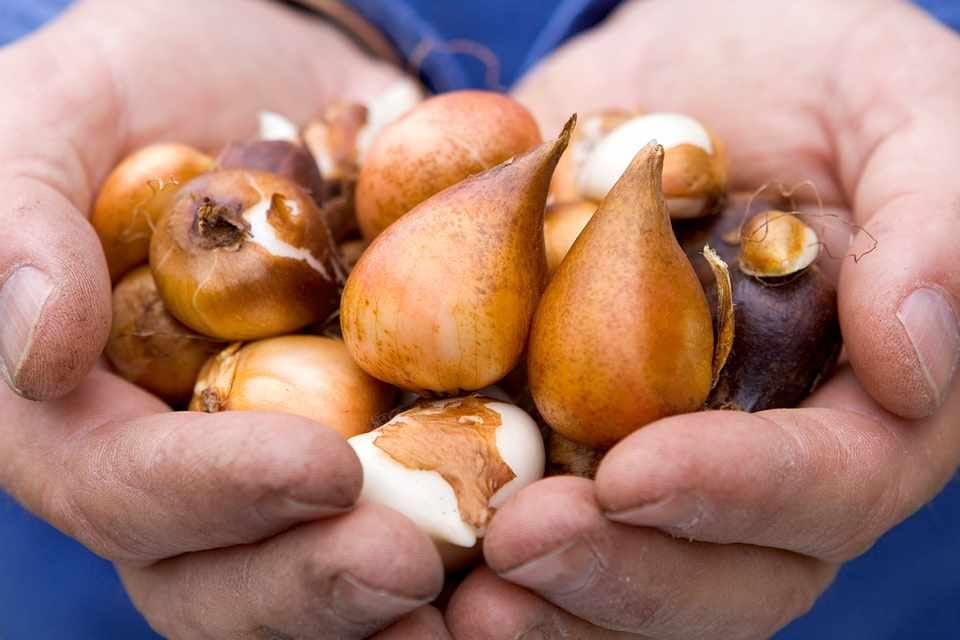
Plant tulip bulbs at a depth equal to 2–3 times the height of the bulb.
For most standard tulip bulbs, this means:
Depth: 6–8 inches (15–20 cm)
Spacing: 4–6 inches (10–15 cm)
Larger bulbs can be planted slightly deeper, while smaller botanical tulips may require a little less depth.
Planting Depth by Tulip Type
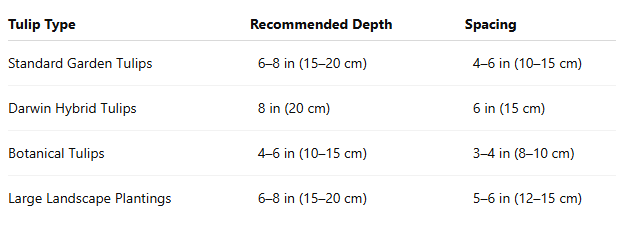
How Soil Type Affects Planting Depth
Different soils require slightly different planting techniques.
Sandy Soil
Sandy soil drains quickly and warms up faster.
In sandy conditions, planting bulbs slightly deeper helps maintain moisture around the roots.
Clay Soil
Heavy clay holds more moisture.
Plant bulbs slightly shallower than usual and improve drainage with compost or coarse sand if needed.
Poor drainage is often a bigger problem than planting depth.
Loamy Soil
Loamy soil provides the best balance of drainage, moisture retention, and nutrients.
Standard planting depth works perfectly in most loam-based gardens.
Which Direction Should the Bulb Face?
Always place the pointed end upward.
The flatter end is where the roots will develop.
If you're unsure which side is up, don't worry too much. Tulip bulbs are surprisingly resilient and often correct themselves as they grow, although proper orientation helps them establish more efficiently.



How Far Apart Should Tulip Bulbs Be Planted?
Spacing affects the appearance of your display and the health of the bulbs.
For most gardens:
4–6 inches (10–15 cm) apart creates a full display.
6–8 inches (15–20 cm) apart allows more room for perennial growth.
For a dramatic spring effect, many gardeners plant bulbs in groups of 10–20 rather than in straight lines.
Natural-looking clusters often create a more attractive display than evenly spaced rows.
Planting Tulips in Pots and Containers
Tulips grow beautifully in containers.
Because space is limited, bulbs can be planted closer together than in garden beds.
Just make sure:
bulbs do not touch each other;
the container has excellent drainage;
quality potting mix is used.
Containers may require additional winter protection in colder climates.
Common Planting Mistakes
Avoid these common errors:
Planting Too Shallow
Bulbs may suffer from frost damage, weak stems, or exposure above the soil.
Planting Too Deep
Very deep planting may delay emergence and weaken flowering, especially in heavy soils.
Poor Drainage
Standing water is one of the biggest threats to tulip bulbs.
Well-drained soil is essential.
Crowding Bulbs
Overcrowding reduces airflow and can increase disease risk over time.
Step-by-Step Guide
Choose a sunny location.
Loosen the soil.
Dig a hole 6–8 inches (15–20 cm) deep.
Place the bulb with the pointed end facing up.
Space bulbs 4–6 inches apart.
Cover with soil.
Water lightly if the soil is dry.
That's all it takes to give your tulips a great start.
Frequently Asked Questions
Can tulip bulbs be planted too deep?
Yes. Excessive depth can slow growth and reduce flowering, particularly in heavy clay soils.
What happens if tulips are planted too shallow?
Bulbs may freeze during winter or become exposed after repeated freeze–thaw cycles.
Can I plant several bulbs together?
Absolutely. Planting in clusters often creates the most impressive spring display.
Should I add fertilizer when planting?
A bulb fertilizer or compost can be beneficial, but avoid excessive nitrogen.
Do tulips need full sun?
Most tulips perform best with at least six hours of sunlight each day, although light afternoon shade can be helpful in warmer regions.
Tip: To get massive blooms next spring, don't forget to fertilize your bulbs. Check out our Complete Bulb Fertilizer Guide
Final Thoughts
Planting tulip bulbs at the correct depth is a simple step that makes a significant difference. Combined with healthy soil, proper spacing, and good drainage, the right planting depth helps bulbs establish strong roots and produce vibrant flowers in spring.
Whether you're planting a few bulbs in containers or creating a colourful garden border, following these recommendations will give your tulips the best possible start.
Continue Learning About Tulips
Continue Your Garden Academy Journey
Explore more expert guides:
🌷 The Complete Guide to Tulip Bulbs
🌷 Best Tulip Varieties
🌷 How Deep to Plant Tulip Bulbs
🌷 Growing Tulips in Pots
🌷 Tulips After Flowering
🌷 How to Store Tulip Bulbs After Flowering
🌷 Common Tulip Growing Problems
🌷 Buy Tulip Bulbs Online vs Local Stores | What’s Better?
🌷 Where to Buy Flower Bulbs Online (USA, UK & Europe Guide)
🌷 When to Plant Tulip Bulbs (Complete Guide for Beginners)
🌷 When To Plant Tulip Bulbs: Complete Guide for US and UK Gardeners
Growing Beauty, Everywhere





Growing Beauty, Everywhere
We help you find the best flower bulbs, seeds, and tools — tailored to your region.
Get your free updates & seasonal planting guides:


This website complies with GDPR
(EU General Data Protection Regulation)
Affiliate Disclosure:This site uses affiliate links. If you make a purchase through these links, we may earn a small commission at no additional cost to you. We only recommend products we trust.
Copyright EUFiori © 2026 All rights reserved. Email